
Online remote tasking has seen a massive surge in popularity, with many individuals seeking flexible ways to earn supplementary income by completing simple data validation and encoding operations. ECNL-style platforms are often looked at for micro-tasking opportunities because they offer structured, repetitive tasks that do not require specialized technical degrees. However, the popularity of these remote micro-tasks has also attracted malicious cybercriminals. These bad actors frequently design sophisticated clone portals that mimic real platforms, specifically aiming to steal user passwords and personal data.
When attempting to access your dashboard, ensuring you use the correct login portal is critical to preventing account compromise. For instance, when looking at different automation tools or verification processes, you can review this guide on the ecnl login as one example of how registration and settings are typically structured in these ecosystems. Understanding how authentic portals operate is your first line of defense against online spoofing attempts.
Understanding ECNL-Style Encoder Tasks
Encoder tasks generally involve transcribing data, validating automated forms, or processing text strings that automated algorithms struggle to read. These platforms operate on a micro-task model, dividing massive data processing jobs into thousands of tiny components that individual remote workers can execute. It is important to emphasize that while these platforms provide a way to perform basic data entry, they do not offer guaranteed high earnings, easy money, or rapid wealth. They are simply micro-job directories requiring consistent time and effort for modest rewards.
The Growing Threat of Fake Earning Portals
Phishing remains one of the most common vectors for credential theft. In the context of remote encoding work, scammers build replica sites that copy the layout, color scheme, and typography of authentic portals. When a user arrives at one of these fake pages, they are prompted to input their username and password. Instead of logging the user into a task dashboard, the fake page secretly records the credentials and transmits them to the attacker. Once inside, attackers can modify payout details, access personal details, or lock the original user out entirely.
How to Verify a Login Page is Genuine
Protecting your account begins with a strict verification process. Follow these five vital security guidelines before entering any details:
First, check the domain name in the browser address bar. Phishing sites often use domain names that are slightly misspelled (typosquatting) or use unusual top-level domains. For example, if the real site ends in .com, a fake site might use .net, .xyz, or a complex subdomain to trick you.
Second, look for the padlock icon in the browser address bar, which indicates an encrypted SSL/TLS connection. While most modern phishing sites also use SSL, the lack of a secure connection is an immediate red flag.
Third, use a dedicated, unique password for every single encoding platform you join. Never reuse your primary email password or online banking passwords. If one database is compromised, a unique password prevents attackers from accessing your other online accounts.
Fourth, if the platform supports it, enable multi-factor authentication (MFA). MFA adds a critical layer of defense, meaning that even if an attacker steals your password, they cannot access the account without your secondary physical verification code.
Finally, remember that authentic platforms will never ask you to pay an onboarding fee, buy a premium license, or send funds via messaging apps to unlock tasks. Any request for upfront money is a clear indicator of a fraudulent scheme.
Your Encoder Portal Safety Checklist
- Is the domain name spelled exactly right, without odd characters or unexpected extensions?
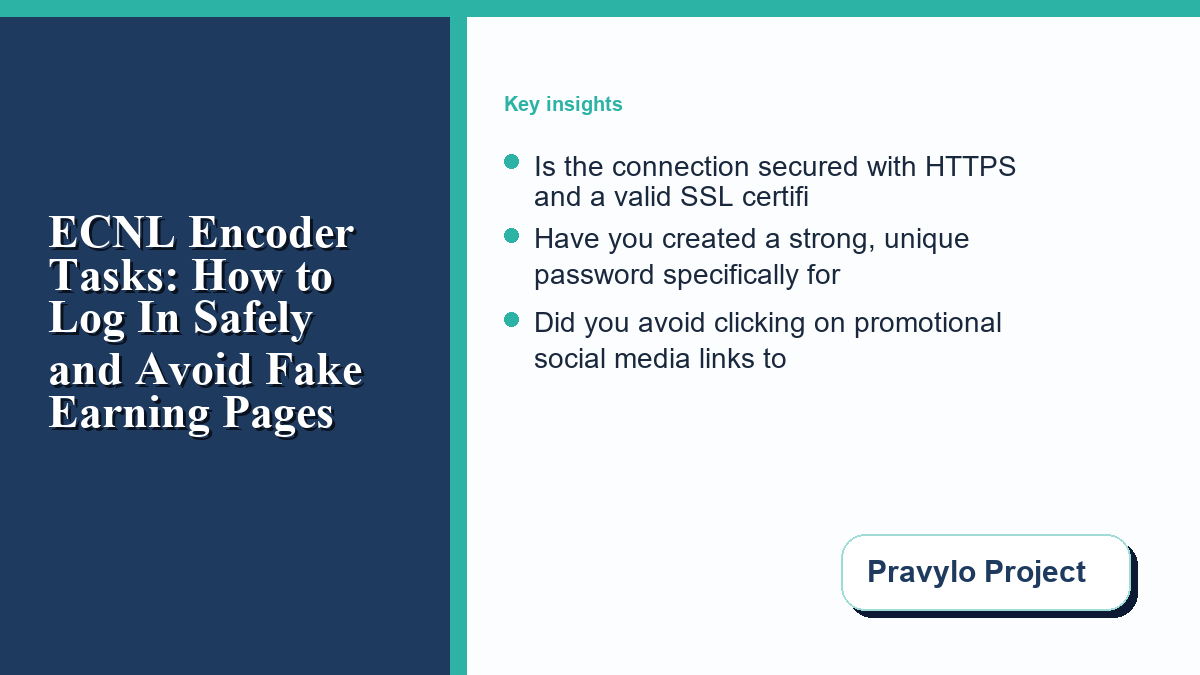
- Is the connection secured with HTTPS and a valid SSL certificate?
- Have you created a strong, unique password specifically for this platform?
- Did you avoid clicking on promotional social media links to access the portal?
- Have you promised yourself never to share one-time password (OTP) codes with anyone?
Frequently Asked Questions
What should I do if I entered my password on a suspicious site?
If you suspect you have entered credentials on a fake page, immediately visit the genuine platform URL and change your password. If you reuse that password on any other sites, change it on those platforms as well.
Do legitimate encoder platforms require upfront payment to join?
No, legitimate platforms do not require workers to pay to access work. Any portal demanding deposit fees or registration payments is likely a scam designed to steal your funds.
Can I share my account or use automated scripts to complete tasks?
Most platforms strictly prohibit account sharing and the use of third-party automation tools. Attempting to automate tasks can result in an immediate account ban and forfeiture of any accrued earnings.
Important Disclaimers
This guide is provided for educational and general informational purposes only. It does not constitute financial, legal, tax, or professional security advice. Users must perform their own due diligence before signing up for any remote work or micro-tasking platforms. Always keep your digital security a top priority: never share one-time verification codes, and never reuse passwords across multiple services.


0 Comments